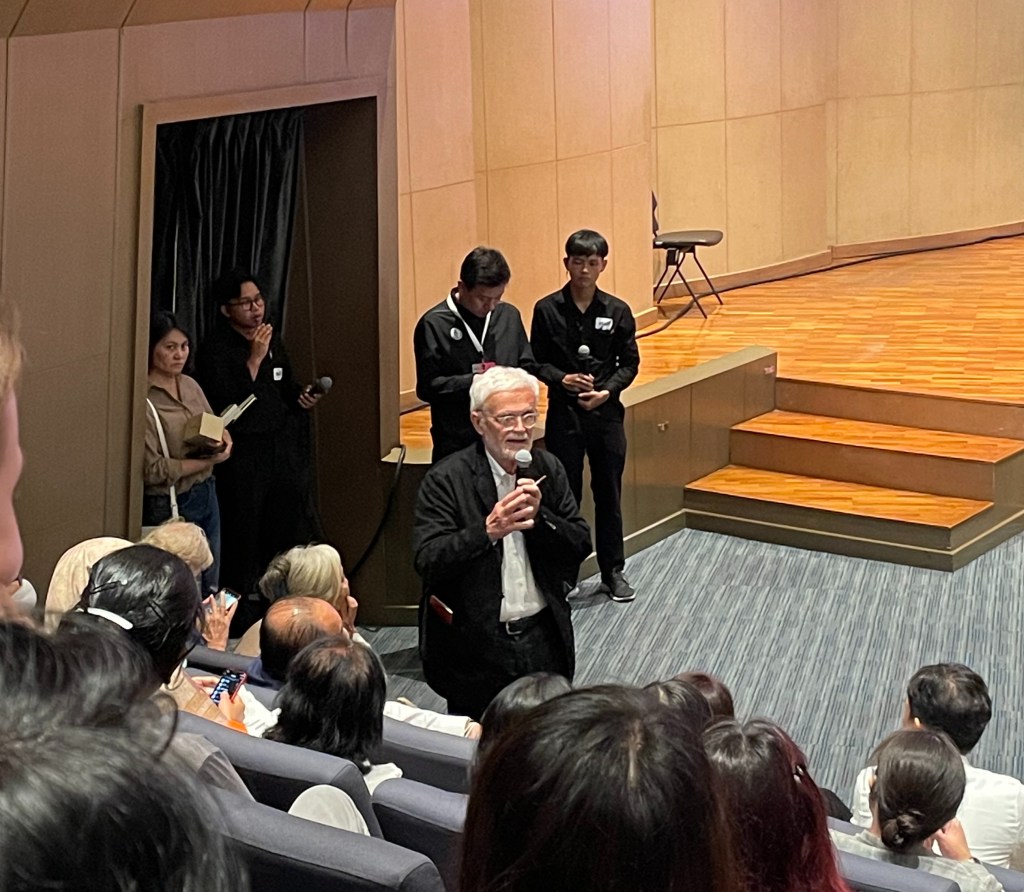
The Italian design theorist Erzio Manzini was invited as a keynote speaker for the Asian University Alliance Conference hosted this year by the Faculty of Architecture, Chulalongkorn University. After years of teaching his works in my design-thinking theory class, it was a humbling experience to listen to his eloquent speech in person.
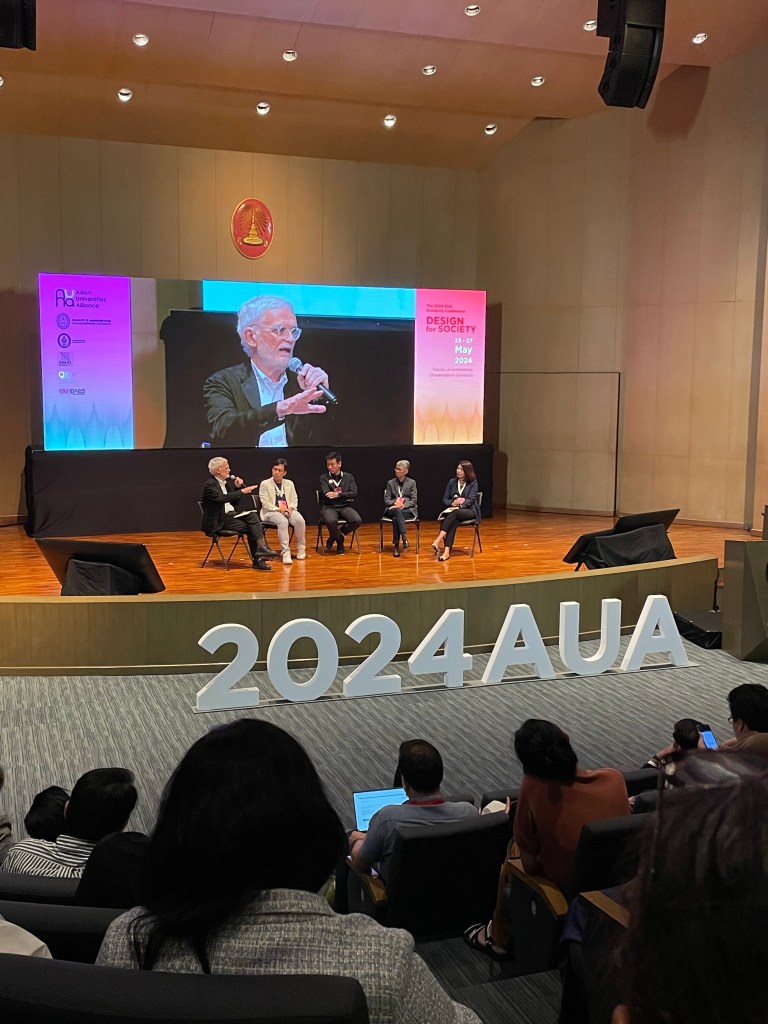
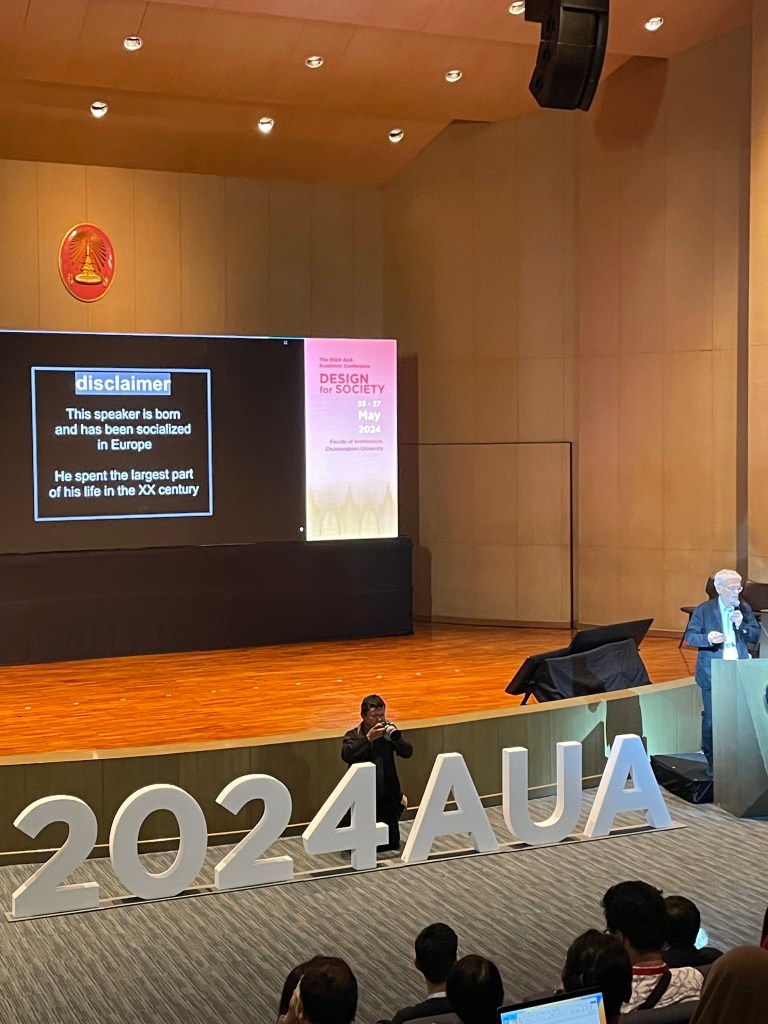
His talk revolved around his book Livable Proximity, which has recently been translated into Thai. Parachuted to Bangkok, he began with a disclaimer about his positionality as a European man, deeply embedded and socialized in European cultures, now speaking in Asia. He acknowledged:
“Design as a dialect of Europe.” and “I’m not trying to talk as somebody else.”
To me, this was a public call to decolonize design by provincializing it, in the words of Chakraborty. He began his talk by invoking the ongoing Israel-Palestine conflict and asked:
“Does proximity make sense today in a world that’s so divided? To recognize someone as an enemy, you have to create distance. ..Design for proximity is a way to design for peace.”
He then sketched a quick timeline showing that proximity has always been general and universal, emphasizing that “the only way to live in the past is nearby.” He contrasted convivial proximity, embodied in medieval towns, with modernist distance, illustrated by Le Corbusier’s La Ville Radieuse. My only dissatisfaction of his talk is this oversimplified cliché often taught in graduate planning theory classes, which overly celebrates medieval urbanism while depicting Le Corbusier as the villain in planning history. (Le Corbusier didn’t negate proximity; he just believed in more efficient ways of achieving it – but that’s a story for another day.)
The apex of his talk was his theory on proximity’s double meaning: as distance (operational proximity) and as care (relational proximity). Reflecting on post-Covid conditions, he discussed loneliness as a pandemic that worsens social fabric and radicalism. Loneliness, in this manner, becomes a political problem, critiquing the misconception that we don’t need to care for each other because technology will one day take care of us. He argued that “care cannot be designed because it is a human relation:
“Just because we have physical proximity doesn’t mean that we have care. But we cannot have care without having physical proximity, either.”
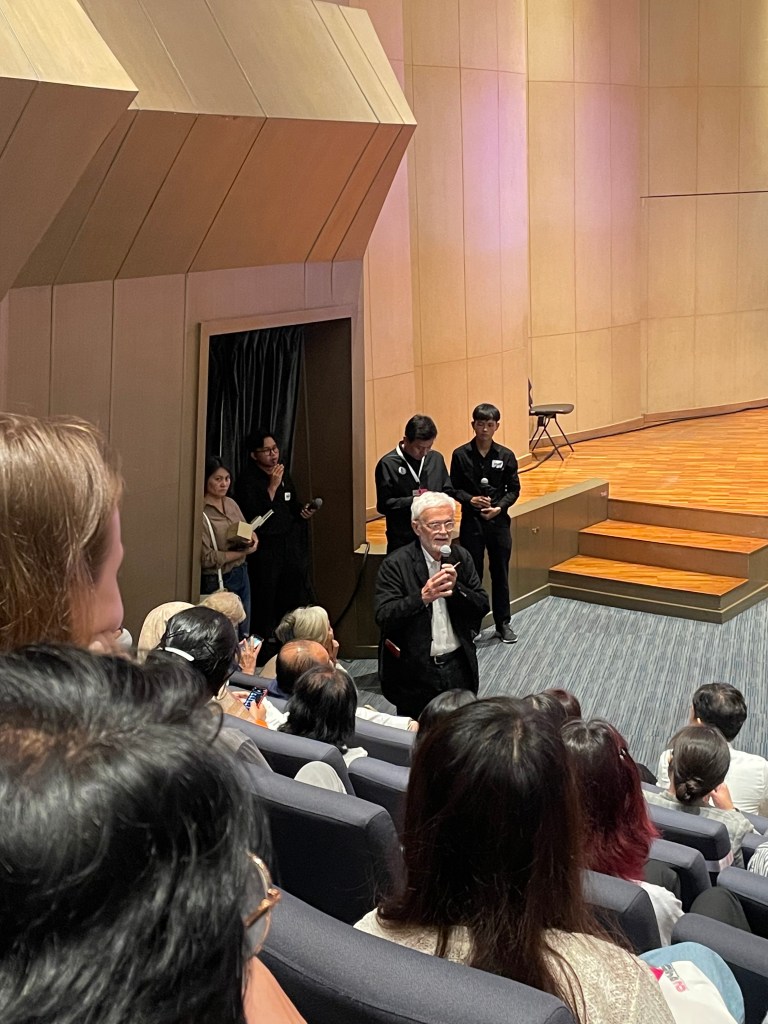
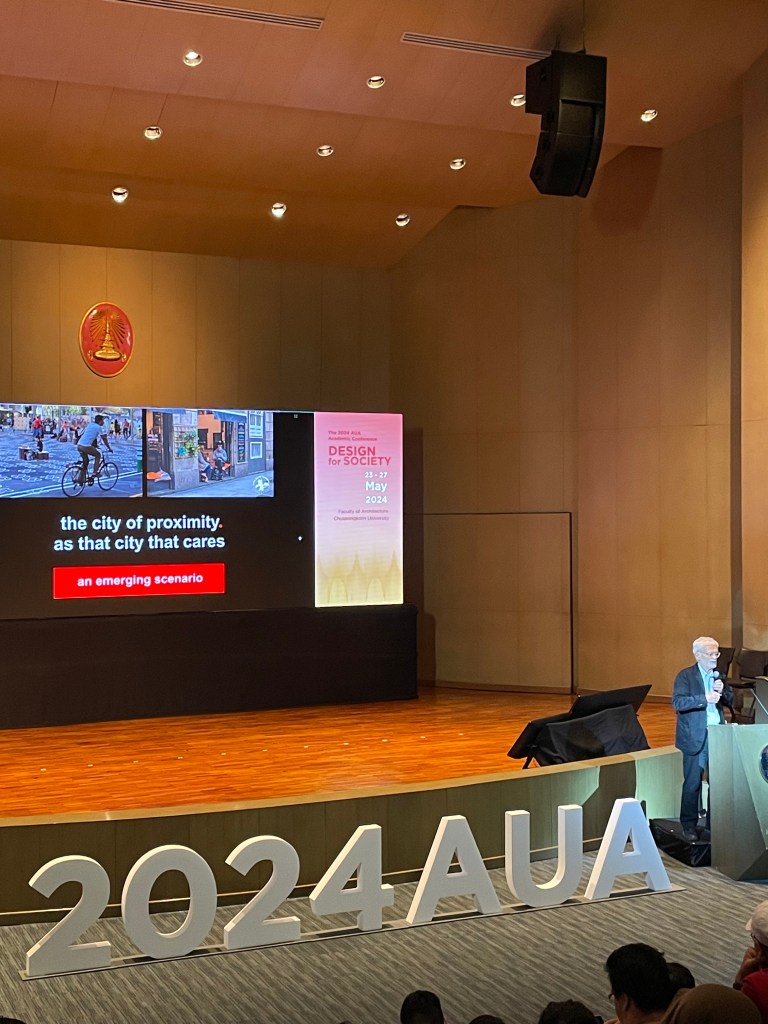
Drawing upon the philosopher Maria Puig de la Bellacasa, he concluded that the city of proximity is the city that cares. And care is tactile; you cannot organize care from a distance. His talk will continue to resonate with us for a long time, and I look forward to exploring more of this idea in his book.
 Napong Tao Rugkhapan
Leave a comment